
Gluten Free Grocery Shopping Guide
This gluten free grocery shopping guide will tell you what to look out for when shopping for gluten free food in New Zealand.
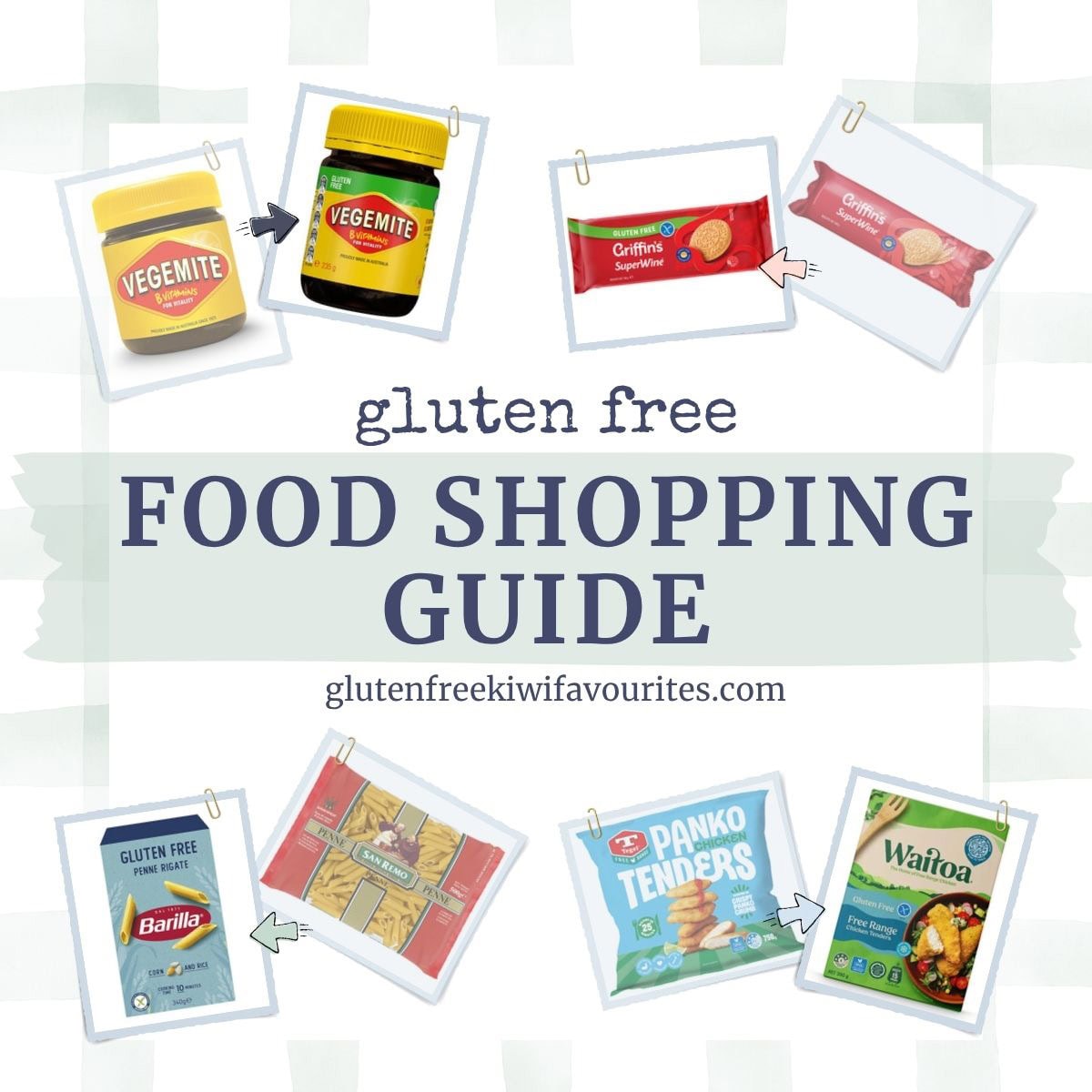
Whether you’re grocery shopping for yourself or a loved one, we’re likely already pretty set in our ways when it comes to food. Sure, we might be happy to try new things, but we all have our favourite products and brands that we fall back on week after week.
So going gluten free and having to find all new favourites can feel truly overwhelming.
Luckily, the range of gluten free products in supermarkets has increased so much in the past few years, and there are likely to be gluten free versions of most of your favourite products.
I’ve written this guide to help you get started with your gluten free grocery shopping, to let you know what to avoid, popular gluten free brands, and some of my family’s favourite products.
I’ve added a table of contents below, so if you don’t want to take a full supermarket tour with me right now, then you can jump directly to the sections you’re interested in.
Before You Shop
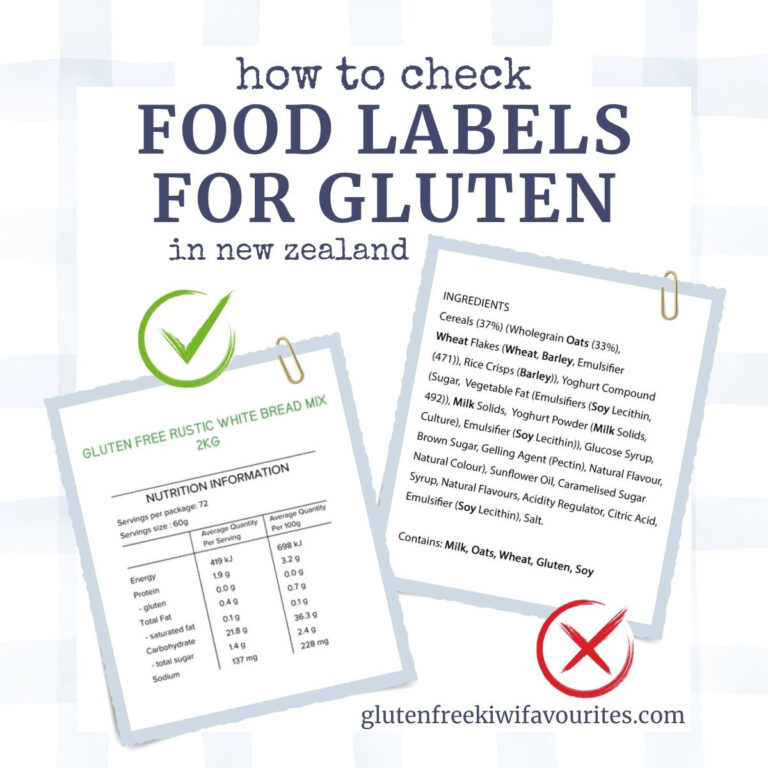
Make sure you’re familiar with how to check food labels for gluten.
The more confident you are with reading labels, the easier shopping for gluten free food will become.
I’m going to talk about both gluten free labelled and “gluten free by ingredient” products, and that post will tell you what the difference between those is, if you’re not familiar.
A few quick tips for grocery shopping when you’re new to buying gluten free:
- If you can, go on a day when you have some time up your sleeve – trying to check ingredient labels in a hurry when you’re not confident at label reading can make things a lot more stressful.
- Before you go, have a think about what you already eat, and which parts of your favourite meals might contain gluten, and will need to be swapped for a gluten free version (this post will help you with that).
- Have a scroll through the online shopping websites for supermarkets in your area. Different stores have different ranges, and the products are often in different areas of the store, so having a quiet browse on your computer or phone can allow you to see products you might walk past in the shop.
- Most supermarket websites have the option to filter for dietary needs; if you select “gluten free”, it will show you gluten free and gluten free by ingredient products. The filters may not always be completely accurate, though, and may still show you non-gluten-free options, so always make sure to check the ingredients before you buy.
- Another important thing to remember if you’re online shopping is that the ingredient lists and allergen warnings on the website may not be accurate and are not always updated if the product ingredients change, so always check the packets when they arrive.
- If you’re online shopping and allow product substitutions, keep in mind that the person picking your order may not be familiar with gluten free products, and if something isn’t available, they may sub it for a gluten-containing product. So if you can, untick the option for substitutions, or make a note that they need to be gluten free.
- When buying gluten free labelled food, be prepared to pay twice as much for half the amount (I exaggerate, but that can be how it feels!). This is due to a few factors, including the cost of making sure the food is gluten-free (dedicated facilities, risk management, more expensive ingredients, etc.), the distance that imported gluten free food has to travel, and the fact that NZ is a small market.
- If you are able to eat gluten free by ingredient and aren’t avoiding “may contain” products, that tends to open up cheaper options for you.
If you’re brand new to shopping for gluten free food, please know that it’s normal to feel overwhelmed. It’s an adjustment period for both shopping and eating.
It takes time to become confident while shopping, and it can also take a while to adjust to gluten free food, particularly for those with food sensory issues, as the texture and taste of gluten free food won’t always be the same.
You may need to try a few different brands of each food to figure out which one you like the most.
Where to Shop
Your first port of call should be your local supermarket. There are lots of options for gluten free labelled food, naturally gluten free food (fruit, veg and meat), and gluten free by ingredient food.
My family shops mostly at Woolworths and Fresh Choice, as they are the two closest supermarkets to where we live, so the products sold there are the ones I’m most familiar with. However, we do make a point of going to New World now and then, as there are some products we can only get there, and I like to wander around to check out any new products.
I also like to pop into organic shops and BinInn if I’m passing by, as they often have gluten free products that aren’t sold in supermarkets.
I haven’t added links to most of the products I mention by name in this post, as supermarket websites and brand websites often change their links. But Googling the product name will show you where you can buy them.
Bars
Most regular muesli bars and baked bars contain gluten, but there are a few different options for nut bars that are gluten free. I like the Mother Earth “Nuts About” ones, and they also have some protein bars that are gluten free.
There aren’t currently any actual muesli bars that are gluten free as far as I know, but if you’re happy to bake some, then I do have a very popular recipe for gluten free muesli bars.
Usually, the gluten free labelled bars will be in the gluten free section, but there will be gluten-free by-ingredient nut and protein bars in the regular muesli bar section.
The Crafty Weka makes a couple of flavours of gluten free nut/seed bars that are really delicious. They very kindly sent me some to try when they launched, and after that, my Dad started ordering a couple of boxes every few months. They come in two sizes, regular and “bite” size, and they’re packaged in little boxes, so they’re really handy to throw in your bag as a snack. You can order on their website, and I’ve also spotted them in various shops as well.
While they’re not bars, Frooze Balls are gluten free and can be a handy snack.
Biscuits
We don’t always feel like baking gluten free biscuits at home, so here are some suggestions for biscuits to grab at the supermarket. These will usually be found in the gluten free section, although sometimes they may be in with the regular biscuits.
Arnott’s has gluten-free versions of some of their most popular biscuits, including TimTams (they are so close to what I remember the original tasting like, I could not believe it), Tiny Teddies, Scotch Fingers, Mint Slice and Shortbread Creams.
Griffins have gluten free versions of their Krispies, Super Wines and Gingernuts.
The Woolworths Free From Gluten brand has quite a big range of biscuits, and so does Pams (New World and Pak n Save).
Other brands to check out include Kea Cookies, Molly Woppy (just be careful as only some of their range is GF), and Leda.
Some gluten free biscuits have a gritty texture, so if you really don’t like that, my picks for non-gritty ones are the GF TimTams, Mint Slice and Scotch finger biscuits. I think Arnott’s have done a great job with those.
Bread
When I tell you how lucky you are to be looking for gluten free bread now compared to even a few years ago, I’m not overstating it. Gluten free bread has come a long, long way in that time. Is there anything that’s exactly like wheat bread, with allll that gluten? No, but the products keep getting better and better, and you have many options to try and find your new favourite.
I think the best thing to do is try a few different breads and see what you like. They’re all slightly different, and what you like is going to depend on what you look for in a bread.
Where should you start? Well, if you’re a white bread fan, then the TipTop Supersoft gluten free white bread is the closest to wheat bread that I’ve ever tasted. They also have a wholemeal version.
The Woolworths Free From Gluten breads are also really popular; they have white and wholemeal as well. Their bread products are made in Australia and shipped here frozen, then thawed on the supermarket shelf, so they recommend you don’t re-freeze them (we sometimes do, and it’s fine. It’s not a food-safety issue with re-freezing bread, it’s more of a food-quality thing). Just something to keep in mind.
My Dad is a grainy bread fan, and his current favourite is the Ploughman’s sunflower and chia seed bread.
My favourite gluten free bread, and really the only one I eat regularly, is the Quality Bakers gluten-free sourdough muffin splits. I use them for toast, sandwiches, burger buns, pretty much everything. If they ever discontinue them, I will be heartbroken 💔
I also really like the Venerdi Gluten Freedom spiced fruit English muffins (shall I horrify you and tell you my Dad and I eat them with gluten free Vegemite, or will you never trust my opinion on food again? 😬), and their incredible slider buns are the closest to a gluten-y bread roll that I’ve ever had.
If you like a more rustic bread and don’t mind paying a bit extra for a quality product, I highly recommend Lucy’s gluten free bread. My Dad and I love the sourdough, and they also make amazing burger buns.
And if you would rather bake fresh bread at home, then the Alternative Bread Co mixes will give you the most amazing fresh-bread smell throughout your house (not to mention a sense of accomplishment for making bread at home like a domestic god/goddess).
Other brands you may want to try include Vogels, Thoroughbread, Home St/Bakeworks, Live Love Loaf, and Allergywise (I told you, there are so many options).
In supermarkets, the gluten free bread is usually either somewhere near the regular bread, or in the gluten free section.
Breadcrumbs
There are a few different options for gluten free breadcrumbs, and you’ll find them either in the GF section or with the regular breadcrumbs. Our favourite is the Fogdog premium gluten free breadcrumbs – they’re quite coarse and make a lovely crunchy coating, and they’re also great in things like meatballs and burger patties, as they don’t go mushy. Fogdog also make a great gluten-free tempura batter mix that we use to make battered fish.
Breakfast Cereals
Most regular cereals contain gluten, in some form or another; however, there are a lot of choices now in the gluten free aisle. There are basics like gluten free versions of cornflakes, rice pops (because regular cornflakes and rice bubbles contain barley), cocoa pops and Weet-Bix (made with sorghum, not wheat), and different kinds of oat-free mueslis.
Aside from breakfasts, I use gluten free cereals a lot in my baking. I really like the Hubbards gluten free rice pops for rice bubble marshmallow slice, and their cornflakes for Anzac biscuits and Afghan biscuits. I also always keep the GF Weet-Bix on hand to bake things like muesli bars, Weet-Bix slice and biscuits.
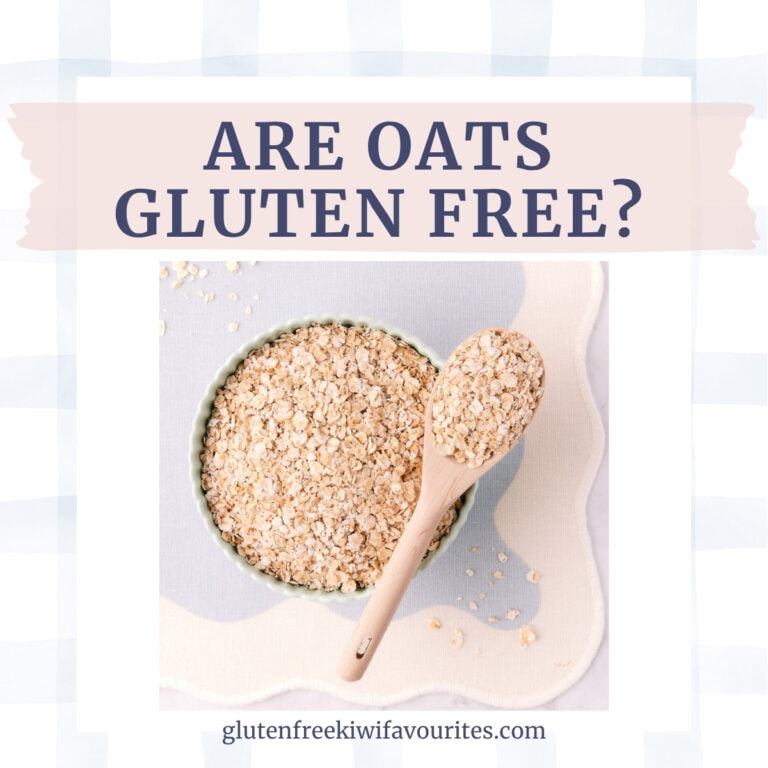
Remember that oats are not considered gluten free in New Zealand or Australia. There is a particular company that uses packaging and branding that confuses a lot of people into thinking it is gluten free, and is unfortunately usually sold near actual gluten free products in supermarkets, but no oat products can be legally sold as gluten free in NZ or Aus.
Canned Foods
In NZ, probably two of the most popular canned foods that contain gluten are Watties baked beans and spaghetti. However, other brands have baked beans that are gluten free by ingredient, including Oak, Macro and the Woolworths own brand.
Some tinned soups and stews contain barley, so be careful to check for that.
Most canned fruits and vegetables should be fine; however, I do recommend being careful with canned lentils, as I’ve seen a few people in the Coeliac NZ Facebook group mentioning they’ve found wheat or barley pieces in their lentils. If you’re using them, it’s a good idea to rinse and pick through them to check for any foreign pieces.
Chips
A lot of regular potato chip brands are now labelled gluten free, and many are gluten free by ingredient.
Most corn chips are gluten free by ingredient, and many are labelled gluten free, however, always check the packet, as sometimes there can be gluten used in coatings or flavourings.
Dip Tips:
Unfortunately, Maggi Onion soup mix, which is mixed with reduced cream to make dip, is not gluten free (one of the main ingredients is wheat flour). Luckily, there are alternatives.
Culley’s Kitchen has an onion dip mix that is gluten free by ingredient, which is available in supermarkets. They also have a pickle flavour dip as well.
Continental Dip Sensations are also gluten free by ingredient.
Many of the premade dips in the chiller section of the supermarket are gluten free by ingredient, like Tararua and Country Goodness.
Confectionery
When shopping for gluten free chocolate and lollies, remember that glucose syrup from wheat is considered gluten free.
Chocolate
A lot of chocolate is gluten free by ingredient, but you will need to look out for anything that has biscuit or wafer pieces, as they usually contain gluten, and anything flavoured with barley.
A few common ones to avoid –
❌ Picnic bars
❌ Kinder Bueno
❌ Crispy M&Ms
❌ Maltesers
❌ anything with Oreo pieces
❌ most KitKat products (although there are some Christmas and Easter KitKat products that don’t contain gluten 🎉).
❌ Mars and Moro bars (both contain barley)
❌ most Lindt chocolate (contains barley, with a few exceptions in their white chocolate products)
Whittakers has many chocolate flavours that are gluten free by ingredient. They do also make products that do contain gluten, and they don’t have separate equipment, however, they do say they have a comprehensive allergen control program(see their FAQ page for more info). I use Whittaker’s chocolate for most of my baking, and my Dad (Coeliac) and I (gluten intolerant) have never had a problem, but that’s only our personal experience.
A lot of Cadbury chocolate is gluten free by ingredient as long as you avoid the ones with biscuit pieces, although they’re not always the best with their labelling. They sometimes say a product contains gluten when it contains glucose syrup from wheat, which is generally considered to be gluten free (they confuse people with their Creme Eggs every Easter 🤦♀️). So just be aware of that when you’re reading their labels.
For gluten free labelled chocolate, try Bennetto (Crossed Grain approved) and Solomon’s Gold (also dairy, nut, soy free and vegan. Queen Anne also has a range of delicious gluten free chocolate-coated marshmallow and caramel products.
Lollies
The main lollies to avoid are most red and black liquorice (including Allsorts), as it contains wheat flour, and a lot of the Natural Confectionery Company and Pascall gummy-type lollies have a wheat thickener that contains gluten.
Most marshmallows are gluten free by ingredient, and some are labelled gluten free. My favourites are the Ma Baker brand.
Crackers
There’s a pretty wide selection of gluten free crackers available, from plain crackers like the Arnott’s Jatz crackers to flavoured rice crackers and seeded crackers.
There are usually some in the gluten free aisle and some in the regular cracker aisle, so it’s worth checking both.
Dairy
Most dairy products are naturally gluten free. I think the main ones to be wary of are yoghurt products that have mix-ins, as the mix-ins may contain gluten. Also check the labels of flavoured milk drinks, just to make sure they don’t have any barley flavouring.
Non-Dairy Milks
Oat milks will always have a “contains gluten” statement, because oats are not considered gluten free in NZ. But there are gluten free labelled and gluten-free by ingredient options for other non-dairy milks like soy and almond.
Drinks
Most commercial juices and soft drinks are gluten free by ingredient, although there are a couple of boutique-style soda drinks that aren’t, including Karma Cola, which contains gluten from malt extract.
Be careful with juice blends or smoothies that contain wheat or barley grass – while the grass itself doesn’t contain gluten (gluten is in the grain, not the leaves), it is something to be wary of regarding cross-contamination, so read the ingredient label and the “contains” statement – if it says it contains gluten, definitely avoid.
Alcoholic drinks are trickier, because unfortunately they are excluded from the allergen labelling rules that other food products must abide by, and they don’t necessarily have to tell you if they contain gluten.
Most commercial and craft beers contain gluten, and should be avoided. However, there are gluten free beers on the market, including Kereru, Scotts, and Two Bays.
Most distilled alcohols are considered gluten free even if made from gluten-containing cereals, as the distilling process is thought to remove the gluten, although some highly reactive coeliacs can still react to them, so that’s something to keep in mind.
Frozen Foods
Unfortunately, most supermarkets don’t have a dedicated gluten free freezer section, so you will likely have to look for the gluten free stuff amongst the regular frozen foods.
Savoury
Waitoa has a range of gluten free free-range frozen chicken products, like crumbed nuggets, tenders, burgers and karaage chicken pieces. We keep the chicken tenders and nuggets in our freezer all the time, for quick lunches or dinners.
Tegel has gluten free crumbed chicken schnitzel, and tempura-battered nuggets.
Pavilion has a great range of pies and savouries, and recently also dumplings.
Most plain chips and wedges from brands like Wattie’s and McCains are gluten free by ingredient. Avoid battered chips or wedges that have a “crunchy coating” as they’re usually not gluten free. My family’s current favourite is the Greater Good Pukekohe Agria Crinkle Cut chips, which are labelled gluten free and are super crunchy when cooked in the air fryer (and also great in the oven).
One of my favourite replacements for frozen wedges is to chop up potatoes into wedges, toss them in a little bit of brown rice flour mixed with The Friendly Food Co “For Every O’Cajun” seasoning and air fry or oven bake until crunchy.
Several brands sell hash browns that are gluten free by ingredient, including Watties.
Frozen Desserts
There are a lot of options for gluten free and gf by ingredient ice creams, but you will need to check the ingredients and avoid pretty much anything that has biscuit/brownie pieces or is in a cone, aside from a couple of flavours of Tip Top Trumpets, which are gluten free and vegan.
Pavillion has frozen gluten free apple crumbles and saucy puddings.
Van Diermen make some really nice tiny gluten free cream puffs that are delicious with a drizzle of chocolate sauce, or dusted with icing sugar.
Fruits and Vegetables
Good news, fresh fruits and vegetables are naturally gluten free 🎉
The only place you really need to be careful is with packaged salad mixes, as sometimes the included dressings or toppings (like crispy noodle pieces) can contain gluten, so check the ingredients before buying.
Herbs & Spices
Most plain herbs and spices are gluten free by ingredient. Some spice mixes can contain some wheat flour as a mixer/free-flow agent, but it’s pretty uncommon. Also see: packet mixes.
Ingredients for Baking
I actually have a whole post about the pantry ingredients I keep on hand for gluten free baking, so I recommend that once you’ve finished this post, you pop over there and check that out.
Meats
Fresh meats
All fresh, unflavoured meat is naturally gluten free. It’s only once the meat is marinated/flavoured/crumbed/turned into sausages or burger patties, etc. that you need to be careful.
The packaging is required to tell you if it contains gluten, so check the ingredients list and “contains” statement for gluten.
Many sausages contain gluten in the form of breadcrumbs or wheat-based fillers, but there are also many gluten free labelled sausages, and also a lot that are gluten free by ingredient.
Make sure you check whole chickens to see if they have flavouring or stuffing, as the flavouring may contain gluten, and the stuffing pretty much always contains gluten.
Cured meats
Most cured meats like ham, bacon and salami are gluten free by ingredient, but it always pays to check the packaging.
Cooked Chickens
A lot of pre-cooked/rotisserie chickens contain gluten either in the flavouring or in a stuffing. And even for those that don’t, they are often cooked in the same rotisserie, which can cause the flavouring from gluten-containing chickens to drip onto those that don’t. It can be worth talking to someone at your local supermarket and finding out how they cook their chickens.
Nuts
Plain nuts are naturally gluten free, but if you’re buying flavoured nuts, always check the ingredients to make sure the flavourings don’t contain gluten.
Packet Mixes
This can be a tricky thing to navigate if you use a lot of packet mixes, which are really convenient but can contain gluten-y ingredients for thickening or flavouring.
Most stock cubes contain gluten in the form of wheat flour; however, Massels and Vegeta both have gluten free stock products. Many liquid stocks are gluten free by ingredient, although you will need to check the pack, as occasionally you might come across one that has barley in it for flavouring.
A lot of packet gravy mixes are gluten free by ingredient as they tend to use non-wheat thickeners these days, but definitely check the packet. There are also gluten free labelled gravy mixes from brands like Maggi.
Maggi has a range of packet mixes that are labelled gluten free. These often confuse people because some have a “contains wheat” statement regarding their soy sauce powder. That’s because the soy sauce powder has been processed so that there is no gluten remaining, so it is safe for Coeliacs, but it is still derived from wheat, so it isn’t safe for those with a separate wheat allergy, which is why wheat is declared separately from gluten.
Pasta & Noodles
There are quite a few different brands of gluten free pasta available in supermarkets these days. You’ll find most of them in the gluten free aisle, but sometimes brands like Barilla are kept with the regular pasta.
Barilla and San Remo are my picks for supermarket brands, but it’s worth trying a few out to see what you like.
The closest pasta to regular wheat pasta that we’ve found (and my Mum is Italian so we’re pretty picky) is the Garofalo brand gluten free pasta, which is available from some Bin Inn stores and other specialty food stores. They also have more interesting shapes than just the regular penne and fusilli. We like the mafalda corta and farfalle. Note: New World sells this brand, but not the gluten free version, so don’t accidentally buy that.
The key to cooking great gluten free pasta is the same as with regular pasta.
- Make sure you use a very large pot of water – the smaller the pot, the more likely the pasta is to stick to the pot or itself
- Make sure the water is boiling rapidly, then salt it well, and add the pasta
- Stir occasionally
- Cook until *just* al dente – don’t cook it until it’s falling apart. It’s actually better to undercook it slightly, then combine it with your (hot) sauce of choice and let the pasta gently finish cooking in the heat of the sauce.
For noodles, we like rice stick noodles, which are naturally gluten free. There are different thicknesses, and you’ll usually find them in the international food aisle, but sometimes in the gluten free section as well. There are also other types of gluten free noodles available, so check out the gluten free section in your supermarket, and also online stores as well.
For instant noodle fans, Trident has a range of gluten-free instant noodles that are available in supermarkets, usually with the other instant noodles, but they also could be in the gluten free aisle.
Sauces and Condiments
One major thing you need to be careful of when it comes to sauces is soy sauce. Most soy sauces contain wheat and gluten. You’ll need to look out for soy sauce that says it’s gluten free – Kikkoman and Lee Kum Kee both have gluten free options.
Tamari, a type of Japanese soy sauce, tends to be gluten free, although you should always check as there are sometimes exceptions. Another option is to buy coconut aminos, which have a similar flavour to soy sauce, however, it tends to be much more expensive.
Lee Kum Kee has a range of gluten free (including some Crossed Grain approved) Asian sauces and marinades.
Another thing to be careful of is sauces that contain vinegar, as sometimes it’s malt vinegar, which contains gluten. But remember, the label must tell you if it contains gluten – it can’t just say “vinegar” if the vinegar contains an allergen. So check the “contains” statement to see if it says gluten.
Speaking of vinegar, avoid the Woolworths brand and Lea and Perrins Worcestershire sauces as they contain malt vinegar, but there are a few different brands that are gluten free by ingredient, like Whitlocks (our favourite), Delmaine and Pams.
When buying vinegar itself, make sure you avoid malt vinegar, as it contains gluten, but you have many other options. Apple cider vinegar and red or white wine vinegar work pretty well in most recipes that call for malt vinegar (my dad uses a combination of apple cider and red wine vinegar, along with some golden syrup in his gluten free pickled onion recipe). I recommend not using plain white vinegar as it’s very harsh (unless you like a harsh vinegar flavour, in which case, have at it).
Spreads
Most sweet spreads like jams and marmalades are gluten free by ingredient.
When it comes to savoury spreads, unfortunately both Marmite and regular Vegemite contain gluten. However, there is a gluten free Vegemite, and there are some other gluten free yeast spreads available.
Do any of the gluten free versions taste exactly like the originals? I actually can’t say for sure because it’s been so long since I had them 😬 But as far as I can recall, I do think the GF Vegemite is pretty similar to the original. And I’d like to think it’s the kind of thing that most people can adjust to over time.
Tortillas and Wraps
Traditional Mexican tortillas are made with corn, and there are quite a few brands that make gluten free labelled corn tortillas, including Old El Paso, Tio Pablo and Free From Gluten.
If you prefer the softer, flour-based wraps, Rebel Wraps make a couple of gluten free ones.
You’ll want to follow the directions on the packet for heating the tortillas or wraps, as they often don’t roll or fold very well if you don’t heat them properly. And try not to overfill them, as all of the gluten free options tend to be smaller than the regular ones.
My all-time favourite gluten free wraps are homemade ones made with the Alternative Bread Co. rustic white bread mix. While it’s not quite as convenient as buying them ready-made, they’re deliciously soft wraps that don’t break when you roll them. You can make up a batch of dough and keep it in the fridge for up to 5 days, and just roll and cook the wraps as you need them.
Vegan Meat Alternatives
Some vegan meat alternatives are made from wheat gluten, or use wheat flour as a binder, so those should be avoided. There are a few options that don’t contain gluten, though, including Angel Bay gourmet veggie burger patties that are gluten free labelled.
Do you have any product recommendations, or have I missed something you think other people should know? Let us know in the comments!
More Helpful Posts
- Start Guide – If you’re new to gluten free baking, this guide will walk you through how to safely bake gluten free.
- Gluten Free Ingredients – This post talks about the gluten-free ingredients I like to keep in my pantry for baking.
- Gluten Free Product Guides – I have lists of gluten free products to help you when you’re shopping for Easter and Christmas.
- How to Read Ingredient Labels for Gluten – I’ll walk you through how to read ingredient labels and exactly what to look for.
- And when you’re ready to start baking, you can find all my recipes here 💜

This is such a brilliant and helpful write up!
One thing I’d add, is I’ve noticed is the “gluten free” search on our supermarket websites New World and Woolworths still brings up gluten products (vegan, keto or other alternative stuff that does contain gluten). Check the ingredient list before adding something new to your list 🙂
Hi Christina, thank you; that’s a really good point! I have edited the post to mention it 💜
Thankyou for this great list – am currently having huge issues with WINZ with my GF shopping list for Disability Allowance – they won’t believe the different prices and sat that San REMO pasta, Arnotts Biscuits and several other items are just normal brands and therefore normal prices!! Which is not true of course! I am a 76 year old pensioner and was diagnosed Coeliac about 35 years ago! I am so sick of having to prove my food choices and prices to them every year! This year they want receipts to prove the prices I have stated – all on one list!! I can’t afford to go out and buy all these products in one hit to get this receipt – they have given me till the 4th September to do this – I just got the letter on 29th August – very unfair! I would love to know if you have a price list – official – that we could suggest they use for everyone! They only pay a small set amount as such anyway and we shouldn’t have to do this every year. As you know as a Coeliac you generally have to shop at several supermarkets to get the things you like so this list takes a lot of doing – they also want the price comparison to normal gluten containing products! Sorry this sounds like a bit of a rant – it is I guess – just very frustrated!!! Thankyou
Hi Erin, absolutely no need to apologise; it doesn’t sound like a rant, but even if it did, it would be totally understandable. Being gluten-free is frustrating enough, but I also know from experience how frustrating it can be to deal with winz 😩 I haven’t applied for that one specifically (I’m not diagnosed Coeliac,”just” very gluten intolerant), but in this circumstance, the only thing I can really suggest trying is to take screenshots of the supermarket product page for the gluten free versions of those products alongside screenshots of the gluten version to show the price difference, (or if you’re signed up for online shopping, add all of the gf versions of product to your cart and screenshot that with the total, then do the same for the gluten versions) and write a short letter explaining that you cannot afford to buy all of those products at one time to have them on a receipt, but that you’re still providing evidence of the price difference. I don’t think a list of prices from me would be official enough for them, but I have had success with other things in the past when I have explained it to them in a letter. Unfortunately, sometimes it feels like they make it difficult on purpose so people will give up. I’m not sure what the answer to the problem is, but know I commiserate with your frustration.
I might look at writing a post about the price differences between gf and non-gf products. I’m not sure it would help in this instance, but it would be an interesting comparison to break it all down.